
A New Era for Longevity: From Sci-Fi to Daily Life
Over the past two years, I’ve been closely monitoring the evolving landscape of longevity science, drug discovery, and related societal shifts. When I first began this entrepreneurial journey, I anticipated a major change in public perception — and over the past year, we’ve indeed seen remarkable shifts that support this direction. The global spotlight on GLP-1 drugs and a growing public understanding of preventive care are clear signals that longevity is becoming mainstream.
I believe this momentum will continue to accelerate, with broader societal adoption and growing interest in longevity technologies.
I’ve noticed a very interesting trend in main stream media recently…
Over the last 2 weeks, The New York Times, TIME, and The Economist have all published thoughtful pieces on longevity. What struck me most was how their tone has changed — these aren’t flashy takes on a cultural trend or speculative futurism. Instead, they treat longevity as an upcoming scientific and lifestyle reality.
- The New York Times (March 6, 2025): “The Age You Feel May Be More Real Than the Age You Are” – Explores the idea of nonlinear aging and the growing importance of subjective age over chronological age.
- TIME Magazine (March 11, 2025): “Aging Is Not Inevitable” – Highlights how aging is now viewed as a treatable biological condition, shifting the focus from lifespan to health span. If you’re curious about more concrete details, among the three articles, the TIME piece offers the most depth on longevity drugs and treatments. Feel free to reach out if you’d like a copy.
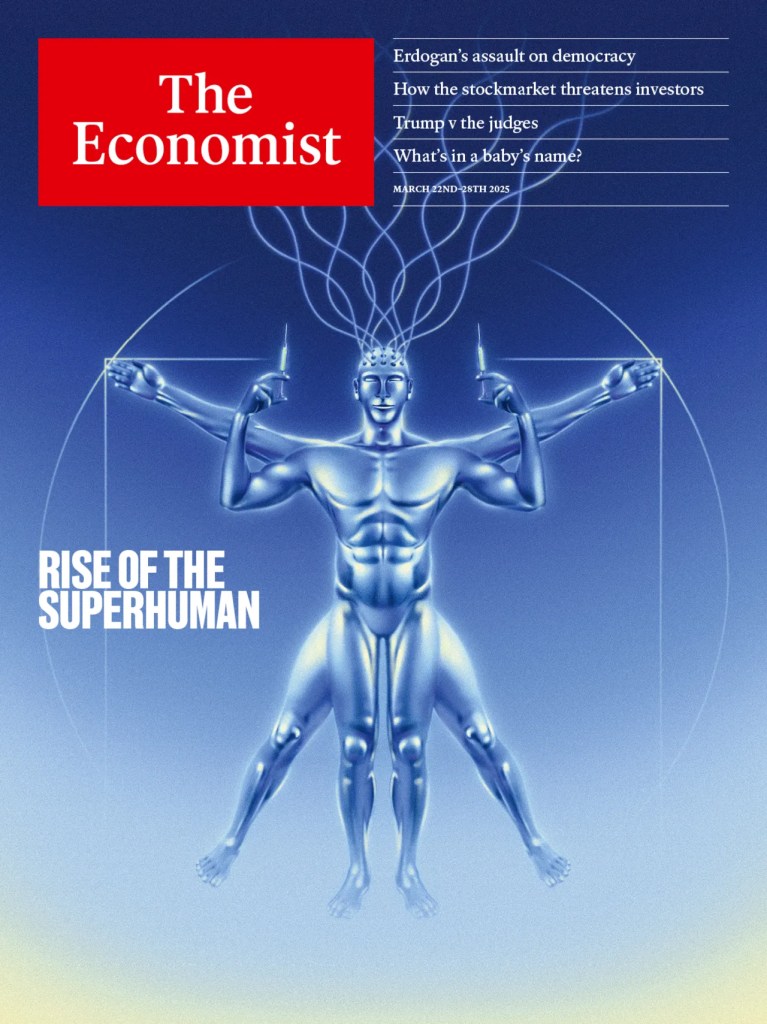
- The Economist (March 20, 2025): “How to Enhance Humans” – Examines human enhancement technologies and calls for urgent public dialogue on the ethics and policies of longevity science. From the potential of senolytics and NAD+ to the importance of how old we feel, and the rise of gene therapy and neural tech — longevity is becoming actionable.
This week’s cover of The Economist, titled “The Rise of Superhuman,” was especially noteworthy. It emphasized that the implications of this movement could ripple across society much faster than expected — and that now is the time to reconsider how we think about medicine and prepare ourselves for this future. It’s a meaningful call to action, urging broader, more proactive public debate around longevity — with governments, companies, and citizens working together to shape the path forward.
We’re at a turning point. Aging better is not a niche topic anymore — it’s a shared mission. It’s clear that the future of longevity is no longer a question of if, but how we choose to embrace it.
 Kyunivers
Leave a reply to What’s normal? 9 Days to Your Health Independence! – Kyunivers Cancel reply