
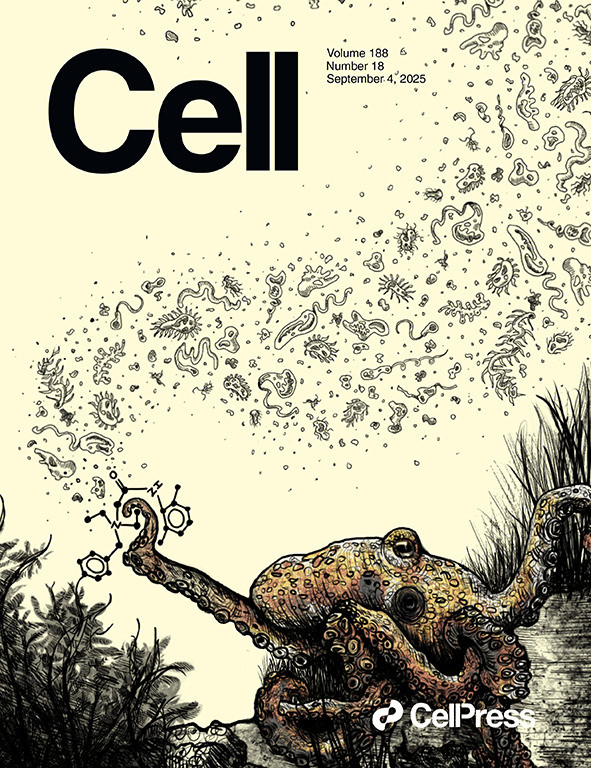
Hi everyone, it’s been a while!
First of all—thank you for the warm messages asking when the next letter would come. It truly means a lot to know that many of you are following along.
As you know, I track what’s happening across the U.S. and Korea in bio, health, and AI— from the research to the industry. That gives me a front-row seat to how fast these fields are evolving.
Every day, my mind races with the same question: how can I think ahead, move early, and gain time in this race — surfing this enormous wave as a nimble small startup founder?
It’s very exciting time!!!
The first study I want to share made waves in Korean science communities about a month ago, and this week it started circulating widely in U.S. circles too.
A New Chapter in Regeneration — Turning Back Time in Old Monkeys
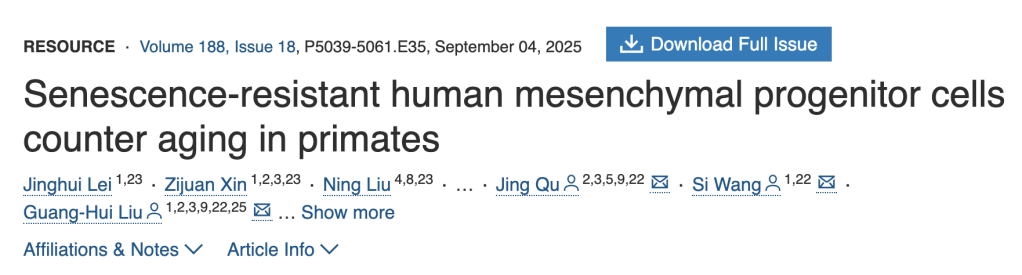
Published in Cell on September 4, scientists engineered senescence‑resistant human progenitor cells (SRCs) by editing FOXO3, a key longevity gene, to boost its stability and nuclear localization. In simple terms, they made stem cells that stay young longer.
Then they tested it in aged macaques—not mice—by giving the animals IV (Intravenous) infusions every two weeks for 44 weeks. No surgery, no complex targeting.
Over nearly a year, the researchers tracked changes through MRI and CT imaging, cognition tests, transcriptomics, epigenetics, histology, and single‑cell sequencing across multiple organs. The results were remarkable: less inflammation and senescence, healthier tissue in the brain, reproductive system, bone, and blood—and no major side effects. Even more striking, biological aging clocks based on gene expression and DNA methylation showed the monkeys were effectively 2–5 years younger after treatment.
What makes this study stand out is scale and rigor. Most mesenchymal stem cell (MSC) work stops at rodent studies. This one combined gene editing and a long‑term primate model.
It’s the first clear evidence that gene‑edited human stem cells can slow biological aging across systems in primates, positioning SRCs as a real anti‑aging therapy candidate.
The research was conducted by teams from theChinese Academy of Sciences and the National Natural Science Foundation of China (NSFC), with several authors also affiliated with Altos Labs.
If the first study was aboutreversing aging, the next one explores how new human life might someday begin in a lab.
Together, they show just how far biology has come—from restoring youth to recreating the origins of life itself.
Can We Make Human Eggs from Skin Cells?
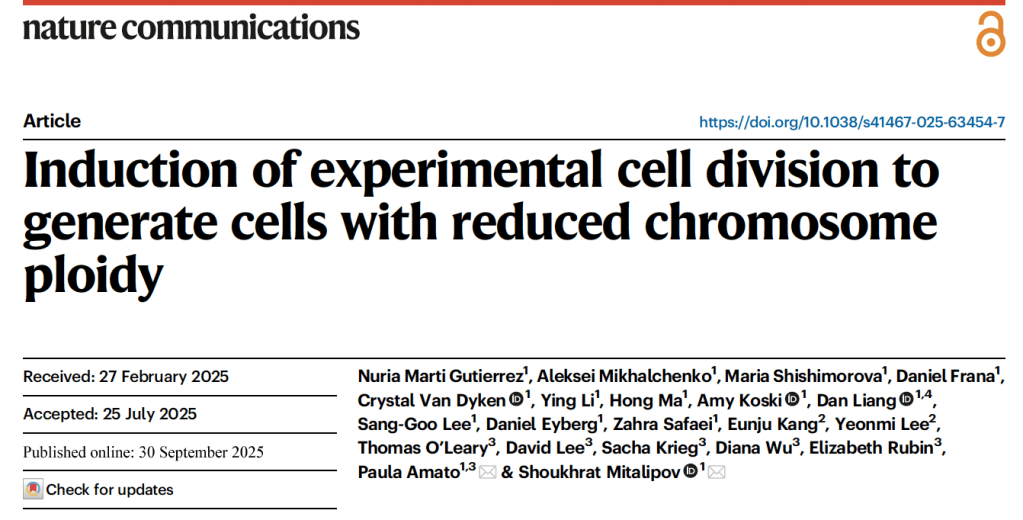
Scientists are exploring new ways to help people who cannot produce their own eggs or sperm have genetically related children. One groundbreaking approach is called In Vitro Gametogenesis (IVG)—the process of creating egg or sperm cells from ordinary body cells, like skin cells, in a lab.
But making eggs is especially difficult. In a woman’s body, it takes over 10 years for an immature egg to fully mature, and it must go through a special kind of cell division to cut its chromosome number in half. Until now, scientists haven’t been able to mimic this complex process using human cells.
In this new study, researchers successfully induced a reductive chromosome division in human skin cells by transferring them into egg cytoplasm and using artificial activation. The resulting cells retained about 23 chromosomes, similar to natural egg cells. Some fertilized embryos even developed to the blastocyst stage.
However, chromosome segregation was random, no genetic recombination occurred, and many embryos showed developmental arrest, meaning this approach is still far from clinical use.
This pioneering work represents the first demonstration of triggering a human skin cell to undergo a chromosome-reducing division inside human egg cytoplasm. It’s an early but crucial step toward the long-term goal of creating lab-grown eggs for infertility treatment and genetic research.
This study was a collaboration between the Oregon Health & Science University (OHSU) in the United States and CHA University in South Korea—an encouraging sign of global cooperation in pushing reproductive biology forward.
Looking Ahead…
Both studies highlight how quickly the frontiers of biology are expanding— from turning back aging to creating the foundations of new life. The pace is accelerating—driven by the rapid evolution of AI tools, the astonishing speed of experimentation by Chinese researchers, and the rise of global scientific collaboration.
For us at EON.HEALTH, these breakthroughs aren’t just fascinating headlines — they’re signals of where the world is heading.
Our mission remains clear: to translate this wave of discovery into everyday longevity— helping people understand, measure, and extend their own functional youth.
And until these scientific breakthroughs truly reach our daily lives, our role is to help people stay healthy enough to meet that future in their best form. That’s what EON is here for.
Stay tuned for more updates, and as always, take care of your body and mind—they’re the first frontier of the future we’re all building together.
While research advances in biology are pushing the limits of what’s possible, the latest breakthroughs in AI are converging toward a new frontier — applications. Over the past week, from new LLM architectures to the business deals surrounding OpenAI has pointed in that direction. To keep this issue concise, I’ll dive deeper into those AI stories in the next newsletter.
 Kyunivers
Leave a comment