
What if everything you thought was “normal” about your health could change overnight?
Because it has again and again.
The whole healthcare industry runs on the model of distinguishing between what is sick and healthy by defining what is normal.
However, what counts as “normal” health is not set in stone.
It shifts across time, regions, and even your zip code.
🎧 Podcasts generated by NotebookLM:
🎧 Listen to “Redefining Health Norms_Your Path to Wellness Independence”
🎧 Listen to “건강 독립_ 변화하는 ‘정상’이라는 기준”
The Moving Targets of Health

In 1997, a fasting blood sugar of 105 mg/dL was considered normal in the U.S. By 2003, that same reading reclassified you as “pre-diabetic,” overnight putting an estimated 35 million more Americans at higher risk at least on paper.
In 1998, U.S. BMI standards changed and 29 million Americans became “overweight” overnight.
In 2017, updated U.S. blood pressure guidelines instantly classified 46% of U.S. adults as having high blood pressure.
Each change brings earlier interventions, but also confusion, and inconsistent global standards.
Recently, the concept of aging itself is under revision.
Major outlets now debate whether aging is treatable—from The Economist’s “Rise of Superhuman” to TIME’s “Aging is Not Inevitable.” . And TIME announces TIME Longevity, a new editorial platform exploring the future of living longer on May.
Health norms vary by geography too:
• Body Mass Index (BMI): In Europe and the U.S., you’re overweight at BMI ≥25. In Japan and Korea, overweight starts at BMI ≥23 – reflecting how Asian populations face diabetes and heart disease at lower body weights. In China, the threshold is ≥24.
• Blood Pressure: In 2017, U.S. guidelines lowered the hypertension threshold from 140/90 mmHg to 130/80. Overnight, nearly half of U.S. adults (46%) were labeled hypertensive – many without symptoms. Meanwhile, Europe and most of Asia kept the older standard for now.
• Diabetes: Pre-diabetes became an official label in 2003 when the fasting glucose threshold was lowered from 110 mg/dL to 100 mg/dL. In Asia, where people develop diabetes at lower BMI and glucose levels, stricter interpretations are common.Today, pre-diabetes affects over 1 in 3 U.S. adults, and even higher percentages across parts of China and India.
• Cholesterol: In the 1980s, total cholesterol under 240 mg/dL was “normal.” Now, <200 mg/dL is the target and Europe is pushing LDL (“bad cholesterol”) targets below 70 mg/dL for high-risk individuals.
But here’s the uncomfortable truth.
“Normal” is just a line drawn by policy, not biology.
The absence of a disease label doesn’t guarantee you’re on a healthy trajectory.
The thresholds defining “normal” can shift overnight and they have, again and again.
So, let me ask you –
Are you willing to gamble your future on a number that could change tomorrow?
Will you lose your chance to stay ahead of decline, simply because today’s definition of “normal” let you off the hook?
Even Your Body Is Changing – Humans Are Quietly Cooling
You probably think you know your body.
But did you know your average body temperature has already changed?
For over a century, 98.6°F (37°C) has been the textbook “normal.” But global studies show that average body temperature is falling. Some populations now hover closer to 97.5°F.
It’s not just numbers on a chart.
It’s your biology, shifting beneath the surface. Metabolism, inflammation, and environmental factors are reshaping the baselines we thought were fixed.
If your own physiology evolves, why shouldn’t your approach to health?
Consumers Are Rewriting the Rules
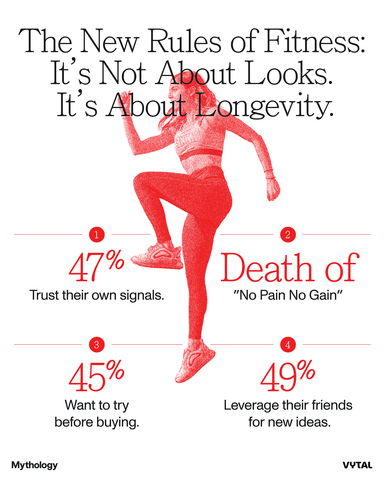
It’s not just experts reshaping health norms. A recent survey found nearly half of Americans trust their own body’s signals more than traditional health experts. Many reject rigid one-size-fits-all advice, turning instead to personal data, self-tracking, and proactive lifestyle changes.
Wearables, home tests, and AI-driven insights are empowering people to challenge outdated definitions. But most healthcare systems still focus on reactive disease care, not early pattern recognition.
How EON Helps You Redefine Your Normal
At EON, we believe health isn’t static and it’s certainly not dictated by outdated averages or population-level guesses.
True health is personal, evolving, and actionable.
Our mission is to empower individuals to take ownership of their health journey to understand personal baselines, detect early dysfunction, and extend functionality long before conventional medicine even recognizes the problem.
This is about more than metrics. It’s about reclaiming agency in a system that often waits until it’s “too late.” It’s about building tools that align cutting-edge science with real-time, individualized awareness.
And there’s no better moment to embrace that freedom than now.
We’re proud to announce that EON.HEALTH will officially launch on July 4th, Independence Day.
Because true independence means knowing your body, trusting your signals, and leading your own health journey.
Are you ready to redefine your normal and claim your health independence?
👇 Join us and be part of the next era of personalized longevity.
📣 As part of our July 4th launch,
we’re preparing exclusive discounts, perks, and early access benefits for our community. 🎁
Keep an eye on your inbox! 👀
More details are coming your way very soon.
 Kyunivers
Leave a comment