
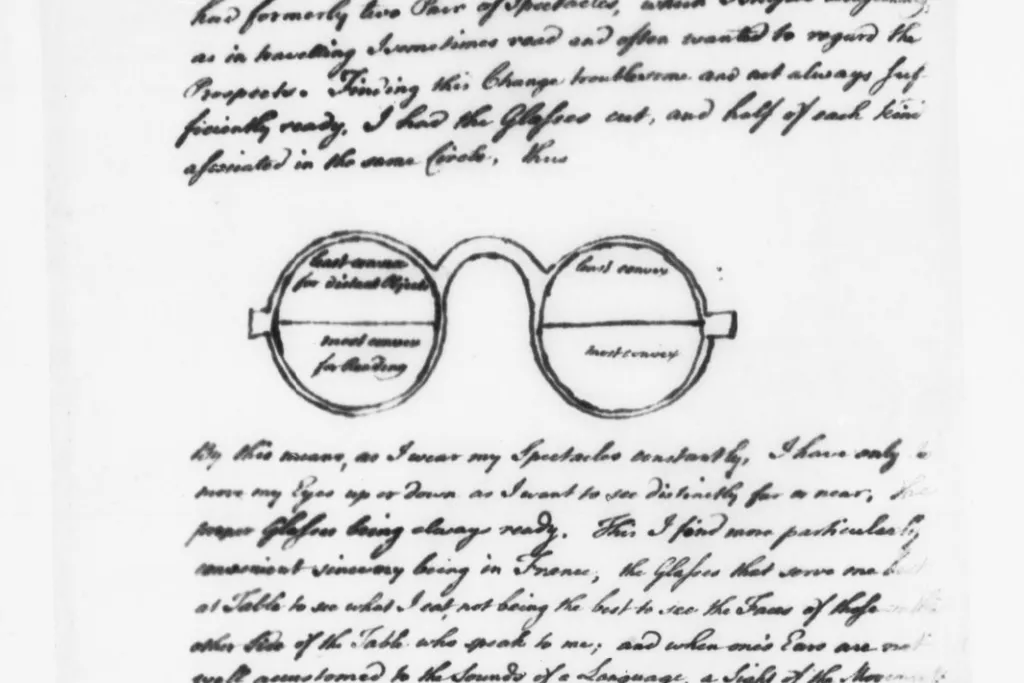
Benjamin Franklin’s drawings of bifocal glasses, Library of Congress
It’s a holiday weekend—so I thought I’d share something different.
A story from the past. Personal, unexpected, and, I hope, a little illuminating.
Who I was before..
People often ask how I manage to stay energetic while doing so much.
But those who know me only as an adult might struggle to picture my younger self.
🕰️
I spent the first two years of my life in hospitals, and much of my early childhood in a state of constant fragility. I lived with asthma, atopic dermatitis, allergic skin reactions, chronic sinus infections, headaches, and joint pain.
My mom took me to Korea’s top specialists—many of whom had just returned from medical training in the U.S.—and gave me rare, expensive herbal medicines and premium health foods, always seeking out what she believed were the very best treatments available at the time.
Around the age of ten, I read a book titled “I Only Want to Live Until Twenty (1991)”. I cried for days. Her words felt like my own.
When I Met Benjamin Franklin
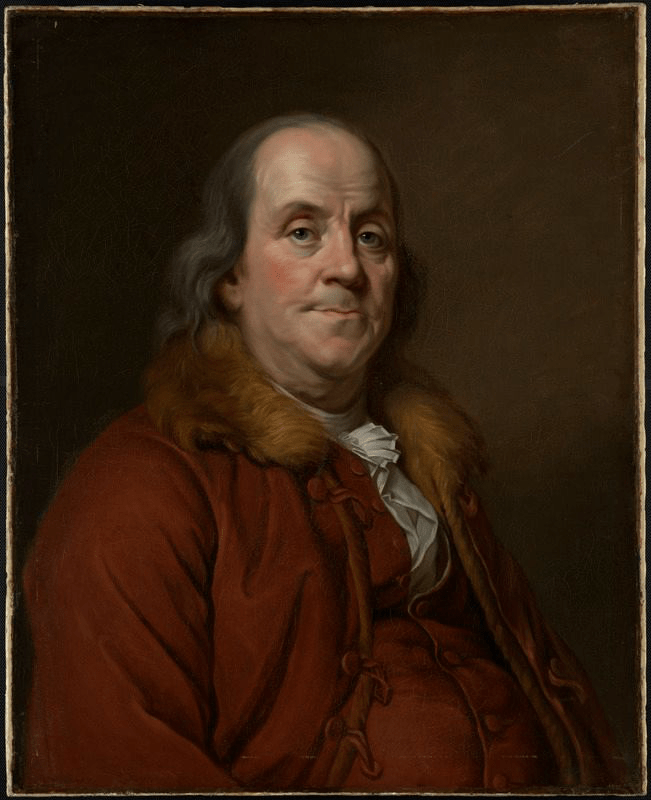
I came across an unexpected role model: Benjamin Franklin. His story helped me see my own path more clearly.
Most people know him as a Renaissance man who helped found the United States. But what struck me most was how he transformed his own limitations.
Like me, Franklin suffered from asthma and frailty in his youth and was considered unlikely to live a vigorous life.
Yet in his 70s and 80s, he was still contributing actively to science, diplomacy, and civic reform—including helping draft the U.S. Constitution at 81, in the year 1787.
His secret?
A lifelong habit of reflecting.
Franklin meticulously observed his habits, failures, and principles—turning self-awareness into action. What we might now call tracking, self-experimentation, and optimization.
He wasn’t just recording—he was identifying patterns. He used his own life as a living system to study and optimize. It was the 18th-century version of what we now call biohacking.
Reading about him, I felt a spark.
Maybe the answer wasn’t outside me—but in understanding myself as a system worth studying.
To approach life with an experimental mindset, and to evolve constantly, can be one of the most liberating acts of all.
My Body, My Lab
By the age of ten, I realized something profound:
My parents loved me deeply—but they couldn’t understand how my body felt. They gave me what they believed was best, but my body kept pushing back.
Even top doctors couldn’t explain the full constellation of symptoms I experienced. Their expertise was deep—but narrow.
So I took a different path.

I began observing, experimenting, adjusting—quietly tracking how foods and routines affected me.
In Korea, skipping rice was like skipping the entire meal. But I found that rice made me feel bloated and uncomfortable. So I limited it to a few bites and prioritized what worked for me.
Eventually, I rejected medications and the expensive herbal remedies. That’s when the conflict escalated. Mornings turned into battles. Many days, I went to school in tears. But I wasn’t rejecting their love. I was rejecting what didn’t serve me.
In high school, while most Korean students stayed at school late into the night as a rule, I chose a different path. I had to prioritize sleep. I requested an exception—and I didn’t follow that norm.
It wasn’t easy to go against the current. Only recently has the importance of sleep gained widespread scientific attention.(“Insomnia symptoms and risk of cardiovascular diseases among 0.5 million adults: A 10-year cohort”, 2019.)
But back then, I was just seen as the odd one out.
A Familiar Story in a New Form

Looking back, I now see that despite receiving top-tier care from both Eastern and Western medicine, most of it was just symptom management. Each new symptom brought a new treatment, but no one asked why my body was reacting the way it did.
I suspect early hospitalization disrupted my immune development. Long-term medications may have damaged my gut. And the expensive herbal remedies? They only worsened my imbalance.
At the time, it felt like a personal struggle.
However,
Millions with chronic conditions today face the same cycle:
more symptoms,
more medications,
yet declining health.
They’re given prescriptions, not answers.
Short term relief, not long term resilience.
The system hasn’t evolved. It has only scaled.
Rediscovering Systemic Wisdom

In my mid-twenties, I discovered Eight Constitution Medicine—a Korean medicine framework that classifies people into eight types based on the relative strengths and weaknesses of their internal organs.
Your constitution influences how your body processes food, responds to stress, and reacts to medicine or the environment.
It helped explain why even “good” foods or medicines might “not work” for everyone. Many people have seen huge improvements in chronic conditions—simply by avoiding foods that clash with their constitution.
For the first time, I felt truly seen. That doesn’t mean I take every detail as doctrine. The model isn’t perfect—eight categories can’t capture every nuance of the human body.
But it’s a huge step forward compared to one-size-fits-all thinking.
It also reinforced a hypothesis I’d been quietly testing: that a systemic, individualized approach could explain what symptom-based medicine consistently overlooks.
I found out I’m a subtype of Tae-Yang—the extremely rare type among Asian women. The term Tae-Yang literally means “strong sun,” symbolizing high metabolic intensity and outward heat. In Eastern medicine, herbs are classified as warming, cooling, or neutral. Ginseng is warming—beneficial for some, harmful for others. It wasn’t helpful for me. It only worsened my imbalance.
I came across a 2023 Stanford study showing that people age at different rates—organ by organ. Your lungs, liver, and heart don’t follow the same biological clock. (“Heterogeneous aging across multiple organ systems and prediction of chronic disease and mortality”, Apr. 2023, Nature Medicine)
This echoes the idea behind Eight Constitution Medicine—your body is a system with unique strengths and vulnerabilities.
Both suggest a simple but radical idea:
health is not one-size-fits-all.
It’s how your system functions as a whole.
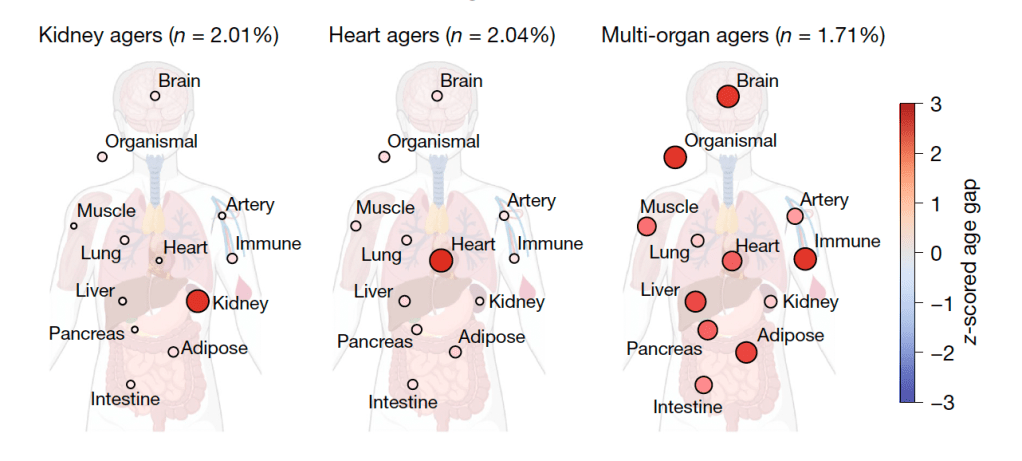
“Organ aging signatures in the plasma proteome track health and disease”, Dec. 2023, Nature
A Much Older Story: Donguibogam
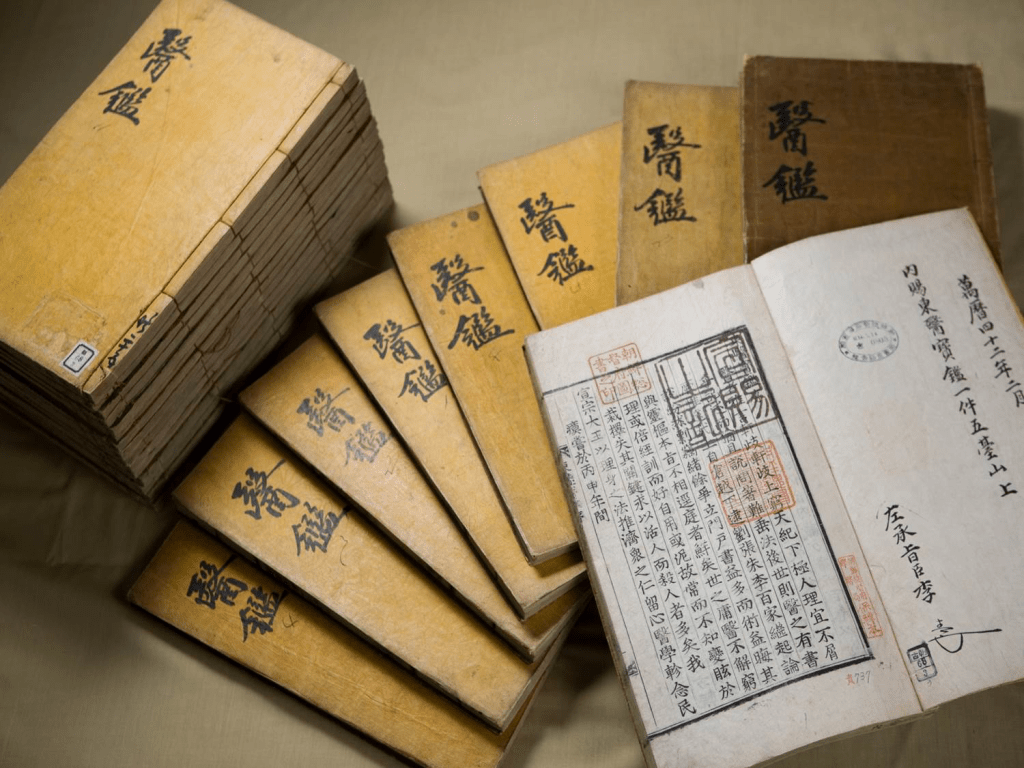
동의보감 (Donguibogam, “Mirror of Eastern Medicine”)
Donguibogam (“Mirror of Eastern Medicine”) compiled by royal physician Heo Jun in 1613, is one of the most influential medical texts in Korean history.
Unlike earlier texts written for elites, Donguibogam was created for everyday people—emphasizing accessibility, prevention, and practical guidance for daily health. It organized medical knowledge not just by diseases, but by bodily systems and root causes, offering lifestyle and dietary prescriptions to help maintain balance.
In 2009, it was added to UNESCO’s Memory of the World Register for both its medical depth and its role in democratizing health knowledge.
If you’re a fan of K-dramas, you may have heard of the 2010 series based on the text. The show was a hit across Asia—and surprisingly, reached viewership ratings as high as 80% in Iraq.

K-drama, Heo Jun, 2010
At its core,
Donguibogam treated medicine not just as a cure,
but as a lifelong system for sustaining vitality.
Surprise?
Many Korean beauty products trace back to Donguibogam.
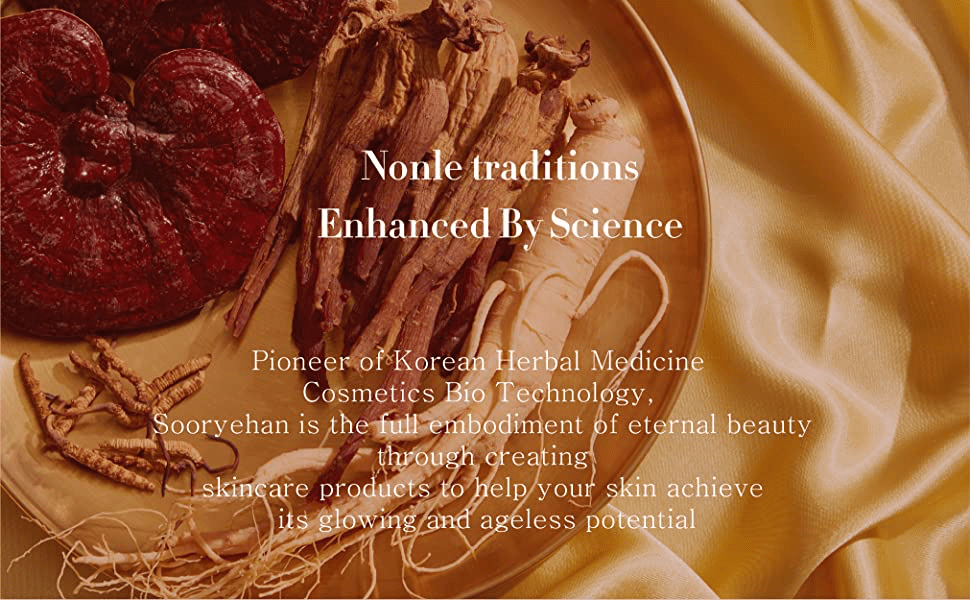
The influence of Donguibogam extends beyond medicine. This knowledge continues to shape wellness across domains—from nutrition to skincare.
Many ingredients documented in Donguibogam are now making a comeback in modern skincare as well – anti-aging, hair loss, and skin barrier repair, etc. In fact, in 2024, Korea became the top exporter of cosmetics to the U.S., surpassing France.
Traditional wisdom, when combined with science, still creates new value.
Where EON Comes In
We still know far less about our own bodies than we think.
At EON, we believe in reclaiming that knowledge—not through guesswork, but through intelligent, personal experimentation.
EON empowers individuals to track and adapt using wearable data, biomarkers, and personalized guidance.
Like Franklin, you become the scientist of your own system—but with far better tools.
We don’t chase isolated metrics. We look at how your recovery, nutrition, movement, connection, cognition and aesthetics interact over time—because the body is dynamic, not static.
Health is not a one-time fix.
It’s a lifelong journey of intelligent optimization.
EON is your companion for that path.
 Kyunivers
Leave a comment